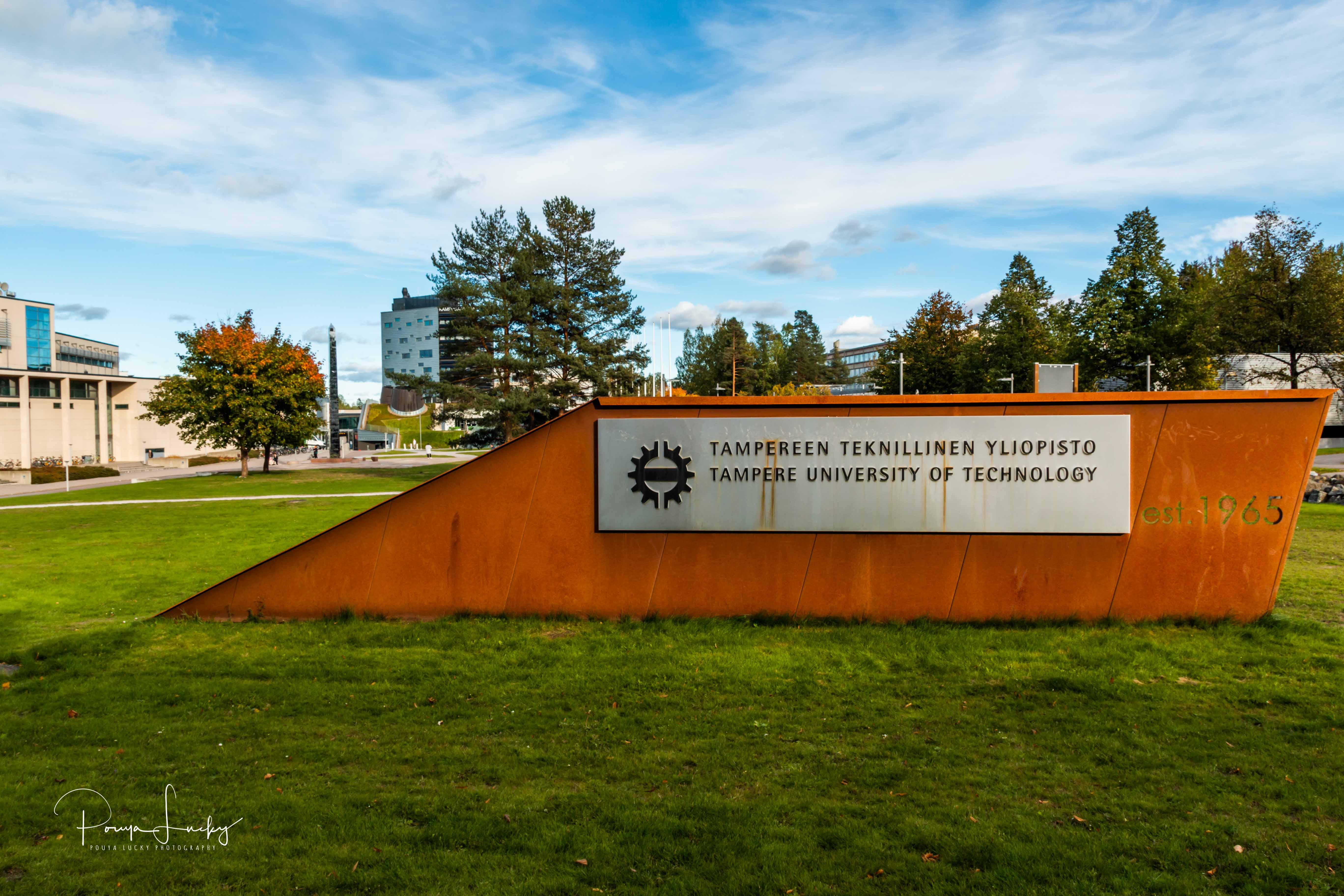
I have completed my Master of Science in the field of User Experience in Tampere University of Technology recently. It took about 8 months time and I ended up with a 5 out 5 score (excellent) which is not that commonly or easily attained. You can read my thesis HERE. I hope that my experience can help other students achieve a similar excellent result and perhaps. Here is an overview of what you will be doing, and some details in how you will be doing them. Of course every field might have their own approach, but this is just an overview and a top level look at how to approach your thesis work and make your life easier.
So the majority of your courses are done and you are ready to embark on the bigger task, the mighty thesis work. First things first. If you think you are done and this is just a small project, think again. I don’t want to be the one who takes the jelly out of your doughnut, but are you in for 30 credit hours of pure work. Here in Finland, 30 credits is 825 hours of work (1 cr = 27.5 hour) which over a time frame of 9 months of 5 day weeks means roughly 5 hours of work every day. So be prepared to start your day with a coffee at 10am and finish off by 3pm to be on schedule.

Topic Selection
After finding a supervisor to over see your work and guide you during these month you are ready to click the start button. The start of the thesis is the topic selection. There are already some ready topics that your supervisor can recommend and offer you, or alternatively you can find your own topic which you believe has a good potential to be developed. But perhaps the best topics are those that are provided by companies and organizations since you will have a chance to be paid for your work and more importantly if the company likes what they see they might end up hiring you.
Initial Research
Now that the topic is chosen and you know what is required, you can start your initial research into the topic. Get familiar with the topic and search on as many platforms as possible including Google, YouTube, and even social media. The aim is to understand the topic and to see what is already done, it’s a good idea to start writing down things you read and perhaps categorize them. One you are familiar with the topic on a general level, you can start doing some academic research using Google Scholar, ACM Digital Library, IEEE Portal, or any other academic research portal for your field. The aim here is to see if similar work has been done or is it a totally novel idea. It would be wise at this point to start creating categories of papers your read and save them for future reference to save time. If the topic is novel then you can focus your search on similar ideas and related work, and if the work has already been done before you can focus on finding how you can improve it or how can you look at the same research from a different angle that would make it unique. After the initial research you have hopefully gathered a wealth of new information about your topic and you can narrow down your topic down further. Update your adviser and let them give you feedback and identify areas that you still need to research into some more. Keep in mind that every bit of the thesis process is iterative and you will constantly be tweaking and adjusting until the very last moment.
Plan and Prepare
So now you are ready to plan and you can start to answer some easy questions of how ? when? who?. The how is how you approach the problem, how you intent to solve the problem and how you intend to answer the research questions. The when is the timelines you set to keep you on track and know when each phase begins, when each phase ends. The who refers to the people you need to collaborate with and who you need to contact to get the required resources and who can be refereed to other than your supervisor for some guidance and practical help. You will also be better off creating an outline of your thesis with all the required sections and subsections to show the skeleton of your thesis. I highly advise reading past thesis work in the same field, at least 2 to 3 of them. This will give you a very good idea of how your thesis should look like and what form of information, visuals, etc should be included. It’s a good idea to look at work who has gotten higher marks if your aim is to get a good mark as well. Once again update your supervisor with the outline and once you get the OK, move on to the next phase.
Research Questions and Research Approach
Now that you have done research into your thesis and have an idea of how your work should look like overall, you can go ahead and draft your research questions and approaches. The questions can always be altered, but keep in mind that you will be basing your research and methodology on answering the questions. It is important to to note that your research questions have to be discussed with your supervisor before you decide to move forward. There are lots of good examples of research paper found online in addition to your own university or department and as a researcher you should always aim at finding the specifics yourself, so go right ahead and research into the topic as much as you have to until you a set of nicely written research questions. Additionally, depending on your field and requirements you will be required to define your research approach and methodology as well. You have to ensure that you link the approach to the your research questions and state how the research can support answering your questions. Data gathering methods such as qualitative and quantitative data collection should be explained and you need to justify why you decided to use the methods and even point to previous studies that used similar methods in the field.

Theoretical Background
You are now ready to embark on the journey and get on with your theoretical framework. Get ready to be disconnected from the world for the next 3 to 4 months from the world. During this time period your work will mainly consist of sitting in front of 2 to 3 monitors finding material that you will be citing and referring to in your work. The aim of this section is to show that you have done extensive research in the field and on the topic and went through a large number of studies in the field before conducting your own research. Start the process by structuring the section with sub sections and defining what information will you be including here. Again, this will highly depend on your topic and the important headings that has to be discussed. For instance history, industrial usage, medical usage, most prominent fields, most important cases can be some of the sub headings. After narrowing down the sort of information you need you can start searching for each topic individually. While you can find the related material using proper sources (academic) first and then extract information at a later stage, my advice would be to go through each research paper you find interesting and start writing a summary of the important topics you find. That way you will be compiling your theory as you go and won’t get confused when you have a few hundred papers to go through. Again, keep updating your adviser and send a draft every once in a while so that they are aware of your progress and can tell you if you are on the right course or need some deviation.
Research Studies
Once you read research paper after paper after paper, you start to see a pattern of how the research studies in the field have been conducted. This will give you an excellent overview of how to conduct your own studies in addition to the writing part. When you conduct the research studies keep a journal and take notes and observations as they will come in handy when you are drawing your conclusions. Following a schedule is highly advised as this way you will know exactly when to start, when to hire participants or make study arrangements. Your research studies will result in a decent amount both qualitative and quantitative probably some in digital format and some in paper format. It would be easier if you spend the time after each test session to transcribe the interviews and results into a digital format, or at the end of every week spend some time to arrange your raw data. If you wait until the very end, you will end up with so much data that will frustrate you just to look at it.
Data Analysis
Now that your data is ready, you can start analyzing the raw, tangled, and weird looking set of data into something that makes sense to yourself, your supervisor, and anyone else who will read your handy work. Basic statistical analysis is almost used in all cases so make sure you refresh your stat terminology and be sure to understand the meanings of mean, mode,
standard deviation, and median. Also, you might need to run some form of statistical testing like a two tailed T-Test to compare your results. It’s important to show the meaning behind your data rather than simple showing it. Additionally, creating graphs and visuals that show your results and compare then in a visual form can enhance understanding of the subject both to yourself and to the readers. Aside from the quantitative data, your qualitative data needs to be analysed as well. Qualitative data can be tricky at first, especially if you have never done any similar work. Some tools that are useful are the affinity diagrams and content analysis. While they are somewhat similar, I find that content analysis is more relaxed and you get a hands on things pretty fast. The process is simple and requires you to know how to use MS Excel and fairly simple data manipulation. There are lots of good tutorials on content analysis on the net, so be sure to watch some videos and learn before moving forward.
Compiling the Thesis
The ideal way to go about is to fill in each section of the thesis as you do it from the start. So when doing your theoretical work. Go ahead and download your thesis template form your university source and just start filling in the thesis template, as this will make life much easier and you will not have to constantly copy/paste from different places and keep changing the size, font, etc to match. You can change the template text color into something other than black which would show your work in addition to easily being able to remove them once you are done with the section of the thesis. For your own ease of work keep a different version after certain updates, that way if you face any issues or want to change something you always have a few back ups. Also make sure to save your work on multiple locations both on a USB, HDD, and also on the web in google docs or similar spaces. Make sure you each section heading and the content are related and the main parts that are required are clearly stated. Your theoretical background and subsections, your research approach and methods, your research studies including the methodology /procedure /finding /participants / etc for each study, your end results and how you answered the research questions, your discussion section and conclusions, and finally your references and appendix which include all the supplementary information you want to include. Once all the sections are almost complete, then start refining section by section. The abstract should be the final section that you add all the way to the beginning since you have everything else done and can now write a one page summary of your entire workflow in an easy to understand manner.
Feedback and Iteration
Constant feedback from peers, colleagues, supervisors, and others who are doing their thesis work is considered extremely valuable. You may find out that your work is lacking in one area just by asking around and getting some feedback. Don’t be afraid to ask because you might find something needs to be re-done or a section needs to be completely re-worked. If you are lucky, some people will spend some time reading your work and giving you constructive feedback that you can take into consideration. If you care about your end result, you will not be afraid of iterating, in fact, you will embrace it and look forward to making your work better with every small change.
Polishing the work
Once every single section is complete and your work has been checked, double-checked, and tipple checked, it’s time to do the final polishing. You are better off printing your work at this point and spending a good amount of time reading it from the very first character all the way till the end word by word. Underline things that still don’t make any sense to you or wordings that sound weird, or even wrong punctuation. Printing and reading the physical work is actually different from reading it on a monitor, and you will find more errors and issues that way. But of course one method does not fit all and you may find it better to do it another way. But the idea is to read it word by word and even have a friend or two go through it as well and check for any problem areas.
Submitting Final Work
The submission process is one that is different based on university requirement, but most probably you have to submit it to a system such as Turnitin to check the originality of your work. Make sure that
the work you submit does not have anything copy/pasted directly that would violate the rules as plagiarism is considered the big crime in research work. There are other online tools that might be used as well, so asking your supervisor for advice before your final submission is a pretty clever idea. Once the work is done, save the interview papers, data analysts, and all the other artifacts and collectible during the time as you may need to refer to them at a later time. Once you have submitted your work, prepare to take some time off and relax as you have completed a great milestone in your life. Happy graduation and you are now ready to tackle the real world with you new degree certificate.
 Pouya Lucky